Tax and Business Community Meeting Between MATTO and the Public Revenue Office
A comprehensive meeting was held between the Macedonia–Turkey Chamber of Commerce (MATTO) and the Public Revenue Office (PRO/UJP), focusing on structural issues of direct relevance to the business community, including tax policies, digitalization, VAT refund procedures, and the overall investment environment.
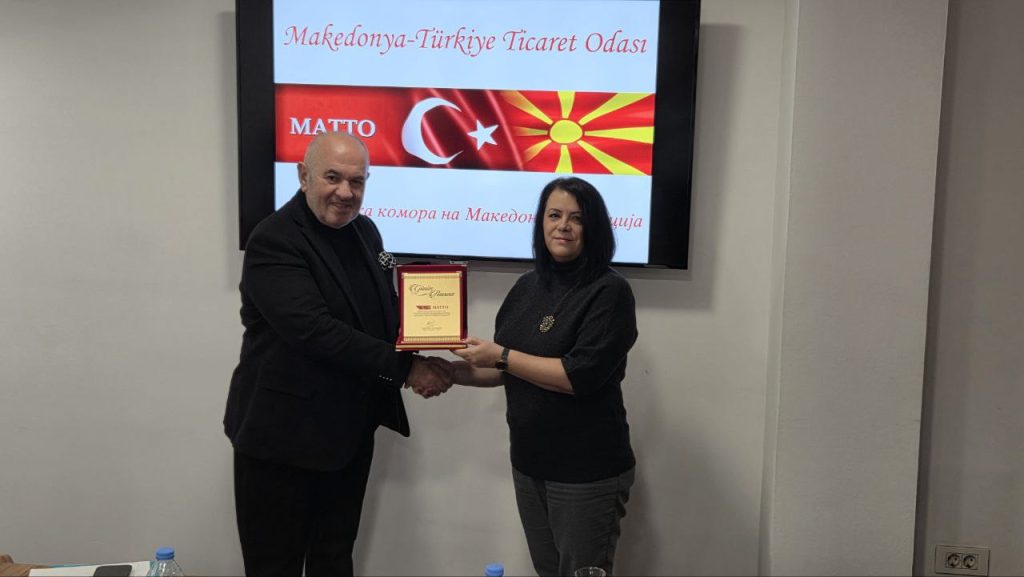
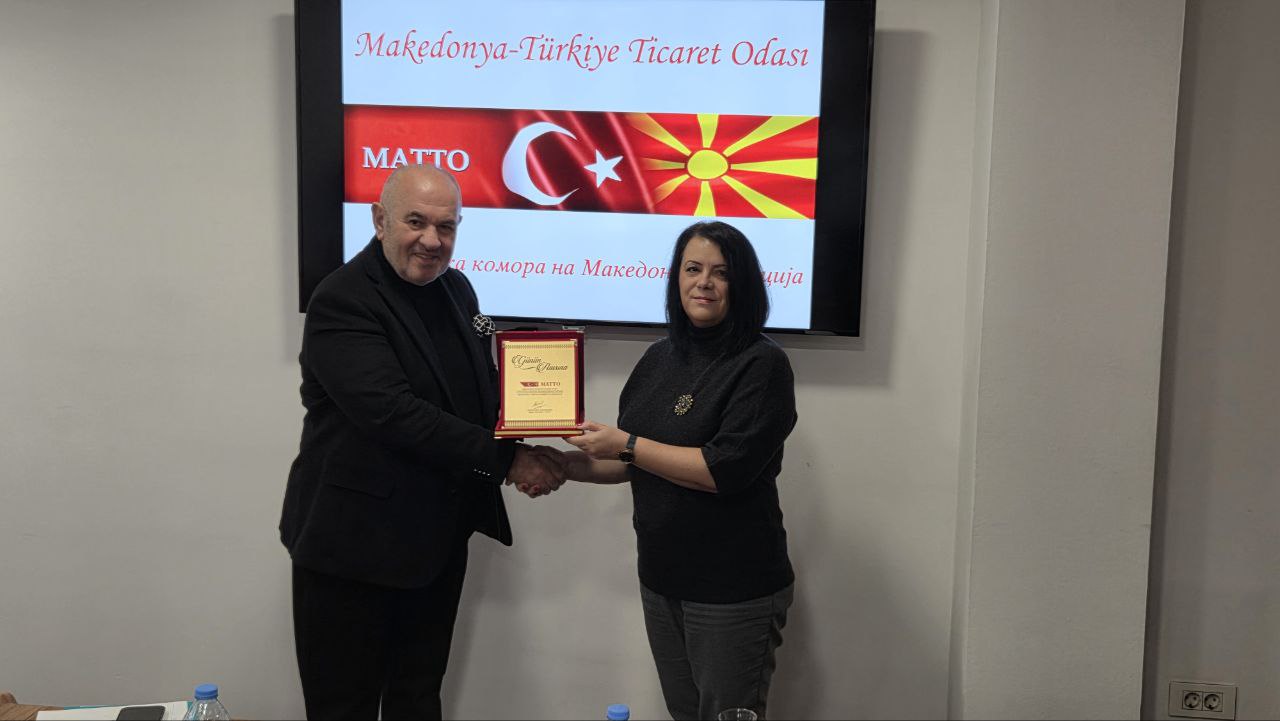
The meeting took place on 22 December 2025 at MATTO headquarters, with the participation of a high-level delegation from the Public Revenue Office led by Director General Ms. Elena Petrova, alongside MATTO’s management and representatives of member companies. The meeting served as an important platform for strengthening direct dialogue between the public and private sectors and for aligning the economic system with the practical needs of the real economy.
Tax Policies, Digitalization, and E-Invoicing on the Agenda
The main agenda items of the meeting included:
current tax policies,
legislative amendments affecting the business community,
digitalization of tax processes,
implementation of the e-invoicing system.
During the presentations delivered by the Public Revenue Office, participants were informed about new practices aimed at increasing voluntary tax compliance, improving taxpayer services, and accelerating administrative procedures through digital systems.
VAT Refund Procedures and Impact on Cash Flow
One of the key topics discussed was VAT refund procedures. The technical team of the Public Revenue Office provided a detailed overview of legally prescribed refund processes, required documentation, applicable criteria, and measures being implemented to reduce delays.
MATTO member companies shared the challenges encountered in practice, emphasizing that delays in VAT refunds create significant cash flow pressure, particularly for export-oriented and manufacturing companies. Members also presented solution-oriented proposals to improve the efficiency of the process.
Demand for Predictability and Legal Certainty
MATTO members highlighted that legal certainty is a fundamental pillar of a sound investment climate. In this context, they emphasized the need to strengthen the binding ruling mechanism, which would provide clarity prior to tax audits, enhance investor confidence, and facilitate long-term business planning.
Digitalization and Reduction of Administrative Burden
The meeting underscored the need for further digitalization of tax processes and the establishment of an integrated “one-stop-shop” system. MATTO stressed that digital infrastructure should not be limited to control and collection purposes but should also deliver speed, transparency, and service quality. Clear definition of transition periods for e-invoicing and electronic filing, as well as adequate technical support for taxpayers, was requested.
International Tax Alignment and Competitiveness
Within the scope of corporate taxation, the importance of aligning transfer pricing practices with OECD and EU standards was emphasized. In addition, ensuring legal clarity regarding new global regulations, including the Global Minimum Tax (Pillar Two), was highlighted as critical for maintaining the country’s international investment competitiveness.
Investors’ Emphasis on Digital Transformation
MATTO members stated that existing tax incentives should be expanded to cover research and development, green investments, digitalization, cybersecurity, and human capital development. Such measures were identified as strategically important for sustainable growth and long-term economic transformation.
Challenges in the Application of Social Security Regulations
One of the most prominent issues raised was the inability to effectively apply social security contribution exemptions for foreign employees. Despite bilateral social security agreements and the clear opinion of the Ministry of Labor and Social Policy, companies continue to pay contributions in practice due to the lack of technical implementation within the PRO’s MPIN system.
It was emphasized that this situation increases costs and creates investor confidence risks, particularly for international companies involved in strategic infrastructure projects such as Corridor 8 and Corridor 10. MATTO stressed that the inability to exercise a legally recognized right due to technical limitations represents a serious obstacle to a favorable investment environment.
MATTO’s Clear Position
During the meeting, MATTO clearly articulated the following priorities:
full alignment between legislation, administrative interpretations, and digital systems,
implementation of technical adjustments within the MPIN system to enable contribution exemptions,
strengthening continuous communication and consultation mechanisms between the public and private sectors.
At the conclusion of the meeting, MATTO’s management emphasized that the business community’s core expectation is a transparent, predictable, digital, and enforceable fiscal system. It was noted that such consultations make a tangible contribution to economic reform processes. MATTO reaffirmed its commitment to maintaining constructive cooperation with public institutions to support sustainable growth and strengthen the investment climate.
It was also agreed that MATTO member companies would actively participate in the “Council for Tax Compliance” working group established within the Public Revenue Office. Through this mechanism, MATTO members will be able to directly convey practical challenges, opinions, and solution proposals, thereby contributing to policy development processes. This step is expected to enhance tax compliance, ensure consistent application of regulations, and more effectively reflect business community expectations in decision-making processes.
Establishment of an Open Communication and Consultation Mechanism
Furthermore, an agreement was reached to establish an open, regular, and sustainable communication and consultation channel between MATTO and the Public Revenue Office. This mechanism aims to enable early identification of tax and administrative challenges, rapid resolution of discrepancies between legislation and implementation, and constructive private-sector input into reform initiatives.
The establishment of this cooperation framework is expected to strengthen public–private sector relations, facilitate joint solutions to technical and administrative challenges, and contribute to the creation of a more stable and predictable business environmen